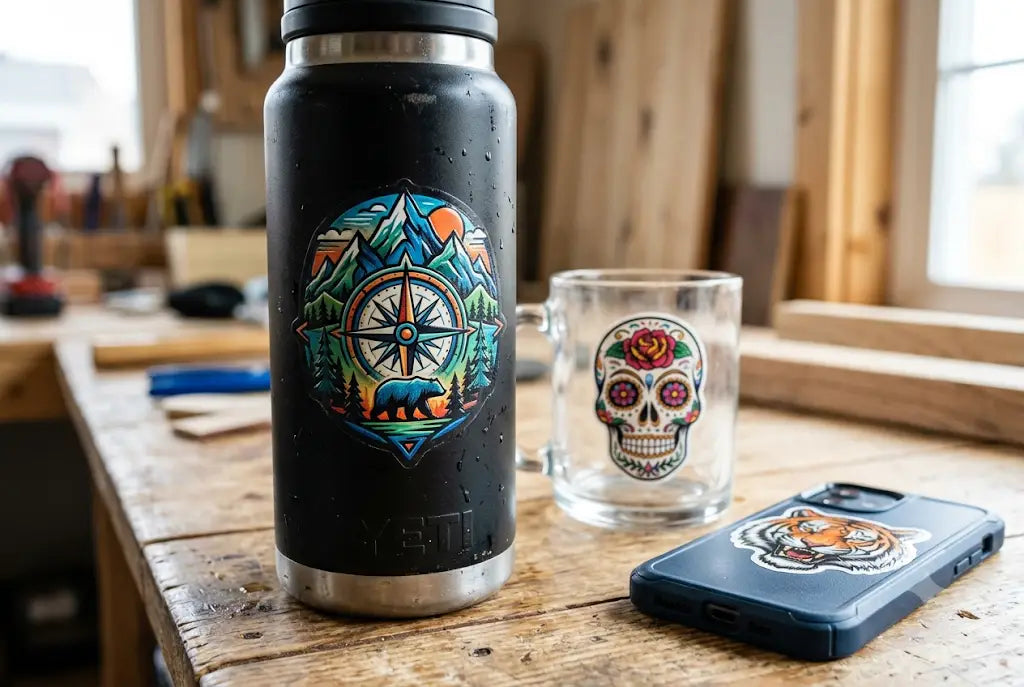
UV DTF sticker durability depends on the surface, application method, cleaning habits, sun exposure, water contact, and how much the item gets handled. On clean, smooth hard surfaces like glass, acrylic, metal, coated packaging, cups, and bottles, UV Direct to Film, or UV DTF, stickers can hold up well for everyday branding when applied correctly and cared for with common sense.
So, how long do UV DTf stickers last? For light indoor use, they can last a long time. For drinkware, bottles, outdoor items, or products that get washed, scraped, or handled all day, lifespan depends on care and testing. If you are building hard-surface products on the West Coast, DTF West Coast can help you choose UV DTF stickers that fit the surface and use case.
Why UV DTF Sticker Lifespan Varies
UV DTF stickers are built for hard surfaces, but every surface tells a different story.
Glass behaves differently than plastic. Stainless steel behaves differently than painted tumblers. A laptop decal gets different wear than a bottle tossed into a gym bag. That is why one sticker can look great for months while another gets damaged fast.
The sticker is only one part of the system. The surface, prep, pressure, care, and use all matter. Boring? Maybe. True? Absolutely.
What Makes UV DTF Stickers Durable?
UV DTF transfers durability comes from UV-cured ink, adhesive layers, and the way the transfer sits on a hard surface.
Unlike paper labels, UV DTF stickers are transferred onto the item. They can have a raised feel and a strong visual finish. That helps them look more like part of the product, not just a paper label stuck on top.
Surface prep is the first test
Clean the surface before applying. Dust, oil, fingerprints, soap film, and lotion residue can weaken adhesion. We have seen one fingerprint mess up a clean transfer. Tiny thing. Big headache.
Pressure helps the bond
After placing the transfer, firm pressure helps the adhesive grab. Rub the full design, especially the small edges and thin text.
How Durable Are UV DTF Stickers by Surface?
How durable are uv dtf stickers depends on where they go. Use this table before you choose the product.
|
Surface |
Durability Outlook |
Watch Out For |
|
Glass jars |
Strong for display and product labels |
Oily residue before application |
|
Glass bottles |
Strong with careful placement |
Curves and frequent washing |
|
Stainless steel |
Good on smooth clean areas |
Brushed texture and scraping |
|
Acrylic signs |
Good for display use |
Scratches and harsh cleaners |
|
Plastic bottles |
Mixed results |
Flexing, coating, and surface type |
|
Phone cases |
Mixed results |
Soft-touch coating and friction |
|
Packaging |
Good for branding |
Rough handling and moisture |
|
Laptops |
Good for smooth shells |
Heat, rubbing, and edge picking |
Are UV DTF Stickers Waterproof?
UV DTf stickers waterproof is one of the most searched questions, and we need to be honest here.
UV DTF stickers can be water-resistant when applied to a clean, smooth surface. That makes them useful for cups, jars, bottles, packaging, and similar hard goods. But waterproof does not mean you should soak, scrub, boil, or run every item through a dishwasher without testing.
For sellers, safer care language is better. Say “hand wash recommended” unless you have tested the exact item, surface, and washing method.
What About Fade Resistance?
UV DTF stickers fade resistance depends on ink quality, sunlight exposure, surface, and use.
Indoor decals usually hold color better because they are protected from direct sun, weather, heat, and abrasion. Outdoor decals or items near windows may fade faster, especially in the bright West Coast sun.
Seattle may be gray half the year, sure. But a sticker on a car window, outdoor sign, or sunny market display still takes a beating. Sun does not care about your launch schedule.
UV DTF Stickers on Glass Durability
UV DTf stickers on glass durability is usually strong because glass is smooth, hard, and nonporous.
Glass jars, candle containers, display bottles, coffee jars, and sample packaging can work well. The key is cleaning. Wipe the glass, let it dry, then apply with firm pressure.
Avoid applying over condensation, dust, oil, or label glue residue. A clean glass surface gives the sticker a better chance to stay flat and sharp.
UV DTF Stickers for Bottles Durability
UV DTF stickers for bottles durability depends on the bottle material and how the bottle is used.
A display bottle or product bottle can hold up well. A daily water bottle that gets tossed in a bag, rubbed against keys, washed often, and dropped on the floor has a harder life.
For bottles, test the exact product first. Check curves. Check edges. Check how the decal handles washing. Then decide if it is ready for sale.
What Affects UV DTF Sticker Longevity?
UV DTF sticker longevity comes down to a few practical factors.
A decal lasts longer when the surface is clean, flat or gently curved, and not handled roughly. It lasts less when the surface flexes, heats up, gets scraped, or meets strong cleaning chemicals.
Better surface, better result
Smooth glass, sealed acrylic, and clean metal tend to work better than textured plastic, silicone, or oily-coated surfaces.
Better care, better lifespan
Hand washing, soft cloth cleaning, and mild soap help. Abrasive pads and harsh cleaners do not.
UV DTF Stickers Wear Resistance
UV dtf stickers wear resistance means how well the sticker handles rubbing, touching, washing, and daily movement.
A laptop sticker may face hand oils and bag friction. A mug decal may face water and soap. A package decal may face shipping rub. A phone case may face constant hand contact, pocket friction, and drops.
No decal loves abuse. If the item is handled every day, make the design simple, avoid tiny floating edges, and test one sample before selling.
What Makes Good UV DTF Sticker Quality?
UV DTF sticker quality starts before printing. Clean artwork matters.
Use sharp files, correct sizing, strong contrast, and simple details where possible. Avoid screenshots, blurry logos, and super-thin lines that may not transfer cleanly.
Good quality also means the sticker fits the product. A design that is too large for a curved bottle may lift at the edge. A design with too many tiny pieces may be hard to apply.
UV DTF Sticker Performance for Businesses
UV DTF sticker performance matters when the sticker is part of the customer experience.
A Portland candle maker needs labels that look clean at the market. A Tacoma gym needs bottle decals that feel branded. A Seattle coffee roaster needs jar logos that look retail-ready. A Tukwila shop needs packaging that looks sharp for local customers. A Bay Area startup needs sample labels before scaling.
That is where UV DTF helps. It supports short runs, custom branding, and hard-surface products without ordering huge amounts too soon.
How to Make UV DTF Stickers Last Longer
Use this quick care plan before selling or gifting UV DTF items.
- Clean the surface with alcohol if the material allows it.
- Let the surface dry fully.
- Apply the transfer with firm pressure.
- Rub all edges before lifting the carrier film.
- Let the item rest before heavy use.
- Recommend hand washing for drinkware.
-
Avoid soaking, scraping, and harsh cleaners.
Simple steps. Fewer complaints.
When Should You Test Before Selling?
Test before selling anything that will be washed, handled often, left in the sun, shipped, or used by kids.
That includes bottles, mugs, phone cases, laptop decals, outdoor signs, jars, and product packaging. One test sample can show edge lifting, color issues, surface problems, or care limits.
“Durability is not a promise you guess. It is a result you test.”
That line saves sellers from a lot of returns.
Bring Longer-Lasting UV DTF Sticker Projects to DTF West Coast
If you are asking how long do uv dtf stickers last, start with the product surface and real use. A display jar is different from a daily bottle. A laptop decal is different from outdoor signage. Match the sticker to the job, then test before scaling.
DTF West Coast can help West Coast creators, product brands, print shops, and small businesses order UV DTF sticker durability-focused transfers for glass, bottles, packaging, laptops, acrylic, and branded hard-surface projects.
FAQ
How long do UV DTf stickers last?
How long do UV DTf stickers last depends on surface prep, use, water exposure, sunlight, friction, and cleaning. They can last well on smooth, hard surfaces when applied and cared for correctly.
What affects UV DTf sticker durability?
UV DTF sticker durability is affected by surface type, cleaning, pressure during application, edge design, water exposure, sunlight, and daily wear.
What is the usual UV DTf stickers lifespan?
UV DTF stickers lifespan varies by use. Indoor display items often last longer than bottles, mugs, or phone cases that get washed or handled often.
How durable are UV DTF stickers on glass?
UV DTf stickers on glass durability is usually strong because glass is smooth and hard, as long as the surface is clean before application.
Are UV DTf stickers waterproof?
UV DTF stickers waterproof usually means water-resistant in normal use. Hand washing is safer unless the exact product has been tested for dishwasher use.
Do UV DTf stickers fade?
UV DTF stickers fade resistance depends on ink quality and exposure. Indoor use usually holds color better than outdoor or direct-sun use.
Are UV DTf stickers good for bottles?
UV DTf stickers for bottles durability can be strong on clean, smooth bottles, but frequent washing, curves, and heavy handling can affect lifespan.
What improves uv dtf sticker performance?
UV DTF sticker performance improves with clean surfaces, strong pressure, correct sizing, simple artwork, mild cleaning, and testing before bulk production.
Conclusion
UV DTF sticker durability is not one fixed number. It depends on the surface, care, water, sunlight, friction, and how the item is used. Glass and smooth hard goods usually give the best results. Bottles, mugs, phone cases, and outdoor items need more testing. Clean the surface, apply with pressure, avoid harsh cleaning, and test one sample before selling a full run.
Share:
DTF Gang Sheet Guide: Setup, Spacing, File Requirements, and Layout Tips
Best Products to Sell Using UV DTF Stickers Easily: Complete Guide