Key Highlights
- What are dtf transfers? They are printed film designs heat pressed onto garments using adhesive powder bonding.
- Direct to film transfers work on cotton, polyester, blends, and dark fabrics.
- DTF transfer durability provides crack resistant, flexible prints that last through repeated washes.
- Average dtf printing cost depends on outsourcing versus in house production setup.
- Following a proper dtf transfer heat press guide ensures vibrant, long lasting results.
The custom apparel industry has evolved rapidly over the last few years, and one technology leading the shift is dtf transfers. If you’ve been exploring garment printing or looking to launch a custom clothing brand, you’ve likely come across this method and wondered, what are dtf transfers and why are they gaining so much attention?
This complete beginner guide breaks everything down in simple language. No technical overwhelm. No confusing jargon. Just clear explanations so you can understand the process, benefits, costs, and long term potential.
What Are DTF Transfers?
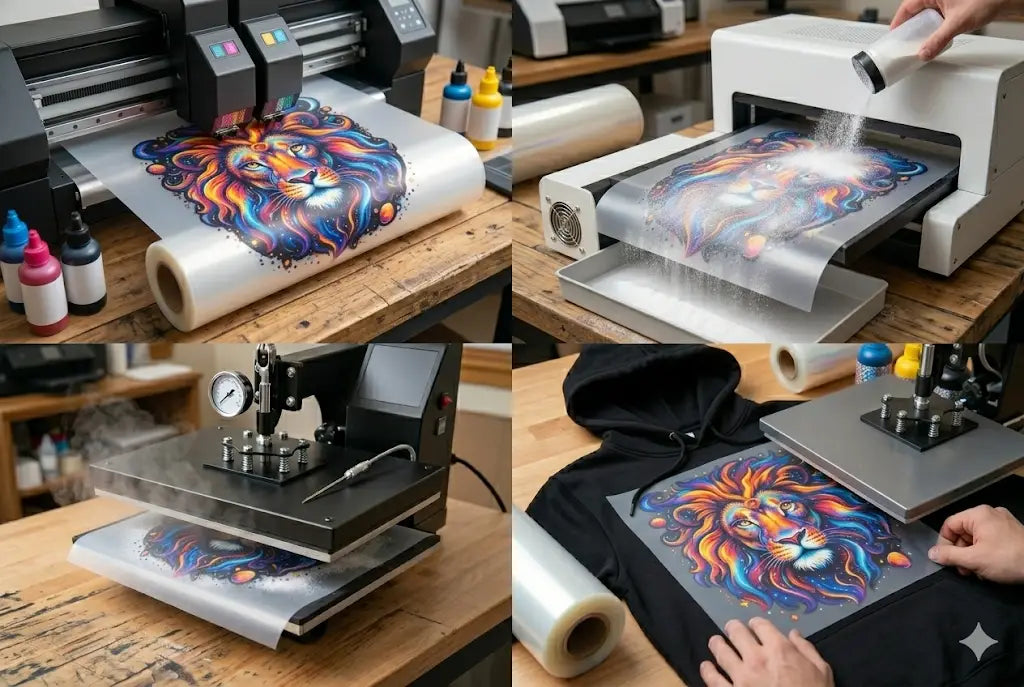
They are a garment decoration method where designs are printed onto a special PET film using dtf printing, then coated with adhesive powder, cured, and heat pressed onto fabric. Instead of printing directly on the garment, the design is transferred from film to fabric.
Unlike older methods, direct to film transfers work on cotton, polyester, blends, and even dark materials without pretreatment. That versatility alone has made dtf transfers incredibly popular among print shops and startups.
Understanding the core concept helps you grasp the growing demand for this printing solution.
How the DTF Process Works
Every successful print starts with preparation. The artwork is first adjusted digitally, then printed in reverse onto transfer film using specialized inks. After printing, adhesive powder is applied while the ink is wet. The sheet is cured so the powder melts and bonds.
Once ready, heat and pressure are applied to press the design onto fabric. Following a proper dtf transfer heat press guide ensures correct adhesion and vibrant results. Learning these dtf transfer basics is crucial for consistent, professional quality prints.
Why DTF Printing Is So Popular
There are several dtf transfer advantages that separate this method from traditional decoration techniques.
First, it allows full color, high detail designs without screen setup. Second, it supports short runs and one off prints. Third, it works across fabric types without requiring different processes.
These dtf transfer advantages make it appealing for small brands, custom order businesses, and even large scale operations.
DTF Transfers for Beginners
For newcomers, dtf transfers for beginners offer a relatively smooth learning curve. You don’t need to master complex screen exposure techniques or invest in large minimum order equipment.
Because the workflow is repeatable and scalable, dtf transfers for beginners provide an approachable entry point into garment customization.
Following a reliable dtf transfer guide helps new printers avoid early mistakes and build confidence quickly.
Understanding DTF Printing Cost
One of the most common questions involves dtf printing cost. The total expense depends on whether you outsource transfers or invest in your own printer. If printing yourself, costs include equipment, ink, film, powder, and maintenance.
While upfront investment may seem significant, long term dtf printing cost per shirt becomes competitive once volume increases. Budget planning is an essential part of any complete dtf transfer guide.
Durability and Long Term Performance
When applied correctly, dtf transfer durability is one of its strongest benefits. Designs resist cracking and fading while maintaining flexibility.
Wash tests show that proper curing and pressing directly affect dtf transfer durability. Skipping temperature or pressure guidelines can reduce lifespan. This is why following a structured dtf transfer heat press guide is critical for quality control.
Heat Press Settings Matter
Heat pressing is not just a final step, it’s a defining one. Most professional setups recommend pressing at 320–338°F for 15–20 seconds using medium pressure.
Accurate temperature ensures proper bonding without dulling color. A consistent process preserves vibrancy and enhances overall adhesion strength. Mastering dtf transfer basics ensures consistent production results and satisfied customers.
Care Instructions for Customers
After application, educating buyers on proper washing extends garment life. Clear dtf transfer care instructions help prevent peeling or premature fading.
Recommended care includes washing inside out, using cold water, and avoiding high heat drying. These simple steps protect the design’s integrity. Following proper dtf transfer care instructions keeps prints vibrant for years.
Comparing DTF to Other Printing Methods
Compared to screen printing, dtf printing eliminates the need for multiple screens per color. Compared to vinyl, it allows smoother gradients and fine details. Compared to sublimation, it works on dark garments.
These strengths explain the growing shift toward direct to film transfers across the industry. If you’re weighing decoration options, understanding these distinctions helps clarify the benefits.
Is DTF Right for You?
Whether you’re an entrepreneur, hobbyist, or established print shop owner, dtf transfers offer flexibility, color vibrancy, and durability. By understanding what are dtf transfers and how they function, you can decide whether they align with your business goals or creative ambitions.
Conclusion
Now you have a clear, complete understanding of what are dtf transfers, how they work, their durability, cost considerations, and why they’re transforming garment printing.
From flexibility to long lasting performance, dtf transfers offer a powerful solution for creators and businesses alike. If you’re ready to explore professional quality transfers and reliable production solutions, visit DTF West Coast.
Frequently Asked Questions
1. What are DTF transfers used for?
DTF transfers are used for decorating t shirts, hoodies, uniforms, tote bags, and promotional garments. They allow vibrant full color designs on multiple fabric types without complicated setup processes.
2. Are DTF transfers beginner friendly?
Yes, DTF transfers for beginners are accessible because they require fewer technical steps than screen printing and do not need garment pretreatment before application.
3. How durable are DTF prints?
DTF transfer durability is strong when pressed correctly, allowing prints to resist cracking, peeling, and fading even after repeated washing under normal garment care conditions.
4. What fabrics work best with DTF printing?
DTF printing works effectively on cotton, polyester, blended fabrics, and dark garments, offering versatility that many traditional decoration methods cannot provide.
5. How much does DTF printing cost?
DTF printing cost depends on equipment investment, outsourcing decisions, ink usage, film pricing, and production volume. Long term cost efficiency improves as output increases.
6. Do I need special equipment for DTF transfers?
Yes, you need a DTF printer, PET film, adhesive powder, curing equipment, and a heat press to produce and apply transfers professionally.
7. What temperature is required for pressing?
Most DTF transfer heat press guide recommendations suggest pressing at approximately 320–338°F for 15–20 seconds using medium pressure for proper adhesion and durability.
8. How should customers wash DTF garments?
Follow DTF transfer care instructions by washing garments inside out in cold water, avoiding harsh detergents, and using low heat drying to maintain print vibrancy.
9. Can DTF prints crack over time?
When applied correctly and cared for properly, DTF transfers maintain flexibility and resist cracking even after extended wear and repeated washing cycles.
10. Are DTF transfers better than screen printing?
DTF transfers are ideal for small batches and detailed multi color prints, while screen printing remains more economical for extremely large production runs.
Share:
How to Start a DTF Transfer Business
How Digital Printing Helps Brands Overcome Supply Chain Challenges