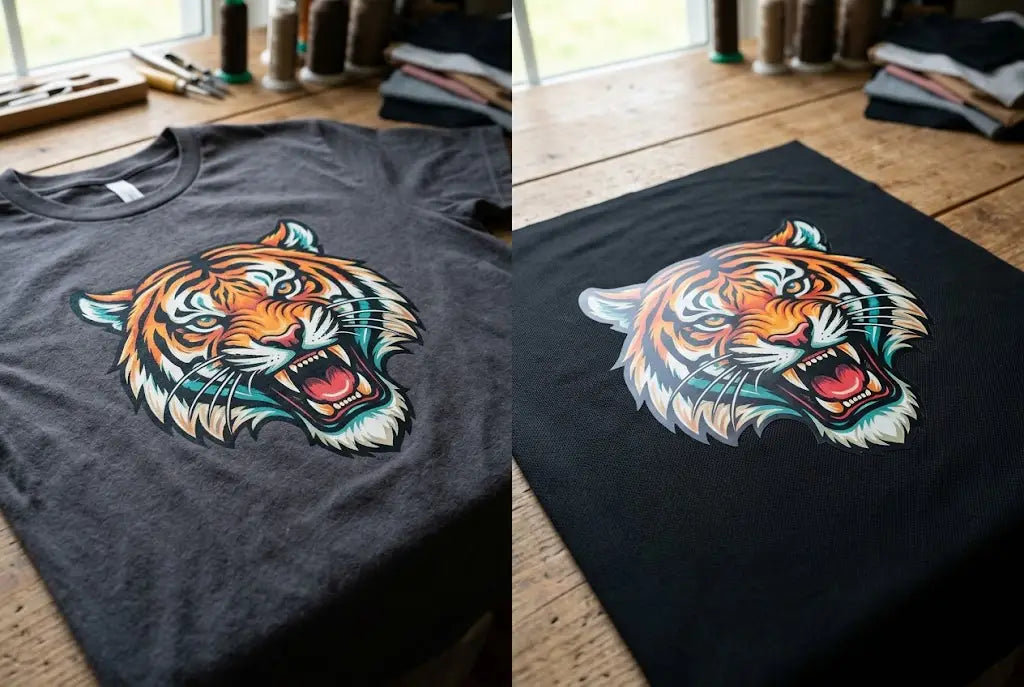
DTF transfers on cotton vs polyester work well because cotton can handle heat and gives the print a strong base. DTF transfers on polyester can also work well. Polyester needs more care. Much heat can leave shine, press marks, shrinkage, or color change.
So cotton is usually easier. Polyester is still a choice when you use the right heat, time, and pressure. DTF West Coast helps West Coast brands, shops, schools,s and teams order DTFtransfers, for cotton shirts, polyester uniforms, blends, hoodies, and merch drops.
What Are DTF Transfers?
Direct to Film, or DTF, is a print method where a design is printed on film, prepared with adhesive powder, cured, and pressed onto fabric with heat.
People like DTF because it works on many garment types. Cotton, polyester, blends, canvas, dark shirts, and light shirts can all be used when the transfer is applied the right way.
Why the fabric matters
The same transfer can act differently on different fabrics. Cotton takes heat one way. Polyester takes heat another way. Blends sit somewhere in the middle.
Why testing helps
A black cotton T‑shirt and a red polyester hoodie might behave differently when pressed. Trying one piece first can prevent a mistake on the whole order.
DTF Cotton vs Polyester: Simple Difference
DTF Cotton vs Polyester is about how heat, feel, stretch, and use affect the fabric.
Cotton feels soft, is natural, and is usually easy to press. Polyester is man‑made and smooth. Is often used in sportswear. Polyester can be more sensitive to heat.
|
Fabric |
Best For |
What to Watch |
|
Cotton |
T-shirts, merch, streetwear |
Shrinkage on low-quality shirts |
|
Polyester |
Sportswear, uniforms, activewear |
Heat marks and shine |
|
Cotton polyester blend |
Hoodies, tees, fleece |
Blend ratio matters |
|
Heavy cotton |
Premium tees |
Even pressure matters |
|
Performance polyester |
Team gear |
Lower heat may help |
|
Fleece blends |
Hoodies |
Seams and texture can affect pressure |
DTF Transfers Cotton vs Polyester
DTF transfers cotton vs polyester is a common question because many orders include different garments.
A school may need cotton spirit shirts. A gym may need polyester performance tees. A clothing brand may use cotton shirts and blended hoodies in one drop. The transfer can work on all of them, but you should not guess the settings.
Cotton is easier for beginners.
Cotton usually handles standard DTF pressing better. It also hides small pressure changes better than many polyester garments.
Polyester needs more care.
Polyester may need lower heat, less press time, a cover sheet, or a test press to avoid shine, scorching, or marks.
Cotton vs Polyester DTF Printing
Cotton versus polyester for DTF printing is not about heat. You also need to consider the thickness of the garment, how much it stretches, the weave, the dye used,d and the texture. Think about how the customer will wash the clothing. A small logo on a polyester polo might press better than a largeprint, on a thin performance shirt.
Feel matters a lot. Cotton usually feels softer because the fabric itself is soft. Polyester tends to feel smoother and can feel more slick under the print.
Stretch
Some polyester and blended garments stretch more. Stretchy fabric needs a strong bond and careful pressing.
DTF Transfer Temperature for Cotton
DTF transfer temperature for cotton must always follow the transfer instructions first. You should check the instructions before you start.
Many DTF transfers are pressed at temperatures between 300°F and 340°F using medium pressure and a short press time. DTF transfer temperature for cotton is usually more forgiving in this range than DTF transfer temperature for polyester.
Why DTF transfer temperature for cotton handles heat
DTF transfer temperature for cotton can take heat well, which makes it easier for everyday shirts, merch orders, and basic apparel jobs.
DTF transfer temperature for cotton pressing tip
Pre-press the shirt for a few seconds to remove moisture and wrinkles. Then place the transfer and press with even pressure.
DTF Transfer Temperature for Polyester
DTF transfer temperature for polyester needs care because polyester can react badly to too much heat.
Polyester can show shine, press lines, scorch marks, or color changes. Many shops use a lower temperature or shorter press time for polyester, but the exact setting depends on the garment and transfer instructions.
Polyester pressing tip
Test one garment first. Use a cover sheet. Watch for shine, color change, and press marks.
Do not overpress
More heat does not always mean a print. On polyester,r it can damage the garment. Fast.
Heat Press Settings for Polyester DTF
Heat press settings for polyester DTF should protect the fabric. Still make the transfer stick.
If the transfer instructions say it is okay to use a temperature for polyester, then you would for cotton. Keep the pressure even. Avoid pressing over seams, zippers, buttons, or raised areas.
Simple polyester check
Press a hidden area first when possible. If the fabric becomes shiny or changes color. Gets too flat, make adjustments before pressing the real design. Pressure matters little pressure can make the bond weak. Much pressure can leave marks. Finding the balance is important.
DTF Transfers on Polyester Hoodies
DTF transfers on polyester hoodies can work well. Hoodies need extra care.
Hoodies can have seams, pockets, zippers, fleece texture, thick fabric, or stretch. These things can stop the press from applying even pressure.
Hoodie placement tip
Avoid pressing over pocket seams, zipper seams, and thick edges. Use a pressing pillow if needed.
Check the fabric label.
A hoodie may be 100 percent polyester, fleece polyester, or a cotton polyester blend. Each one may press differently.
DTF Transfer Durability Cotton
DTF transfer durability on cotton can be strong when the transfer is pressed with the right heat, time, and pressure.
Cotton shirts are worn and washed often. That means care matters. Turn the shirt inside out. Wash with cold water. Avoid bleach. Avoid high dryer heat when possible.
What helps cotton prints last
Correct pressure, clean fabric, full adhesion, proper peel, and gentle washing all help.
What hurts durability
Underpressing, overpressing, wrong peel timing, poor garment quality, and rough washing can shorten print life.
DTF Transfer Durability Polyester
DTF transfer durability on polyester can also be strong when the transfer bonds well.
The main challenge is pressing the transfer without damaging the fabric. Polyester can be slick, stretchy, or sensitive to heat. That makes testing more important.
What helps polyester prints last
Use the right heat, even pressure, correct peel method, and gentle care.
What hurts durability
Heat damage, weak pressure, heavy stretch, rough washing, and low-quality fabric can lead to problems.
Cotton Polyester Blend: What Happens?
A cotton polyester blend can be a middle choice.
Cotton polyester blends are common in hoodies, soft tees, sweatshirts, work shirts, and team apparel.
Cotton polyester blends may feel soft, like cotton. Still keep polyester strength and stretch.
Why blends need testing
A 50/50 blend and an 80/20 blend may not press the same. The cotton side may like heat. The polyester side may not.
Simple blend tip
Start with the transfer instructions. Then test one garment before pressing a full order.
Best Fabric Choice by Use
The best fabric depends on how the item will be worn.
|
Use Case |
Good Fabric Choice |
Why |
|
Everyday shirts |
Cotton |
Soft and easy to press |
|
Sports uniforms |
Polyester |
Light and made for movement |
|
Hoodies |
Blend or cotton |
Depends on feel and use |
|
Gym shirts |
Polyester |
Good for activewear |
|
Streetwear tees |
Cotton |
Strong retail feel |
|
Staff shirts |
Cotton blend |
Comfortable and practical |
Simple DTF Pressing Workflow
A simple workflow helps you avoid mistakes.
-
Check the garment label.
-
Read the transfer instructions.
-
Test one piece if the fabric is new.
-
Pre-press to remove moisture and wrinkles.
-
Place the transfer flat.
-
Press with the right heat, time, and pressure.
-
Peel based on the instructions.
-
Wash and dry with care.
Garment Printing for West Coast Brands
Garment printing on the West Coast moves fast.
Seattle schools need spirit shirts. Portland makers sell at local markets. Los Angeles clothing brands test new drops. San Diego teams need uniforms. Bay Area startups need staff shirts and event merch.
The U.S. Census Bureau reported that U.S. Retail e-commerce sales reached $340.2 billion in the quarter of 2026. This number matters because more and more apparel brands and merchandise sellers are using sales to test products before committing to larger production runs.
If you need DTF transfers for cotton and polyester, DTF West Coast is the place to go. DTF transfers work well on both cotton and polyester when the fabric, transfer,r and heat press settings are properly matched.
DTF West Coast supports creators, schools, teams, shops, and apparel brands on the West Coast. They help with custom DTF transfers, gang sheets, and ready-to-press prints. Their services include cotton shirts, polyester uniforms, blends, hoodies,ies and all kinds of merch drops.
FAQ
Do DTF transfers on cotton work well?
Yes, DTF transfers on cotton work well when pressed with the correct heat, time, and pressure.
Do DTF transfers on polyester work well?
Yes, DTF transfers on polyester can work well, but polyester needs careful heat and pressure because it is more heat-sensitive.
What is the main difference in DTF cotton vs polyester?
DTF cotton vs polyester comes down to heat tolerance, fabric feel, stretch, and garment use.
What is the best DTF transfer temperature for cotton?
DTF transfer temperature for cotton should follow your transfer instructions, but cotton is usually more forgiving than polyester.
What is the best DTF transfer temperature for polyester?
DTF transfer temperature for polyester should often be lower or tested first because polyester can show heat marks or shine.
Are DTF transfers on polyester hoodies safe?
DTF transfers on polyester hoodies can work well if you avoid seams, test the fabric, and use careful heat settings.
Which lasts longer, cotton or polyester DTF?
Both can last well. DTF transfer durability on cotton and DTF transfer durability on polyester depend on press settings, fabric quality, and care.
Can DTF work on a cotton polyester blend?
Yes, a cotton polyester blend can work well, but the blend ratio should be tested before a bulk order.
Conclusion
Cotton is usually easier. Polyester needs more care. Blends sit in the middle.
The best result comes from checking the garment label, following the transfer instructions, testing when needed, and washing with care. Do that, and DTF can work well across cotton shirts, polyester hoodies, uniforms, and custom apparel.
Share:
UV DTF Transfers on Tumblers: Complete Application Guide